Call us today on 01297 692 200 to find out how BGA Accountants can help you!

Blog
Latest Blog & Articles
Stay informed with expert financial insights! Explore our latest blogs on wealth management, retirement planning, and smart investment strategies. Empower your financial future with practical tips and expert advice.
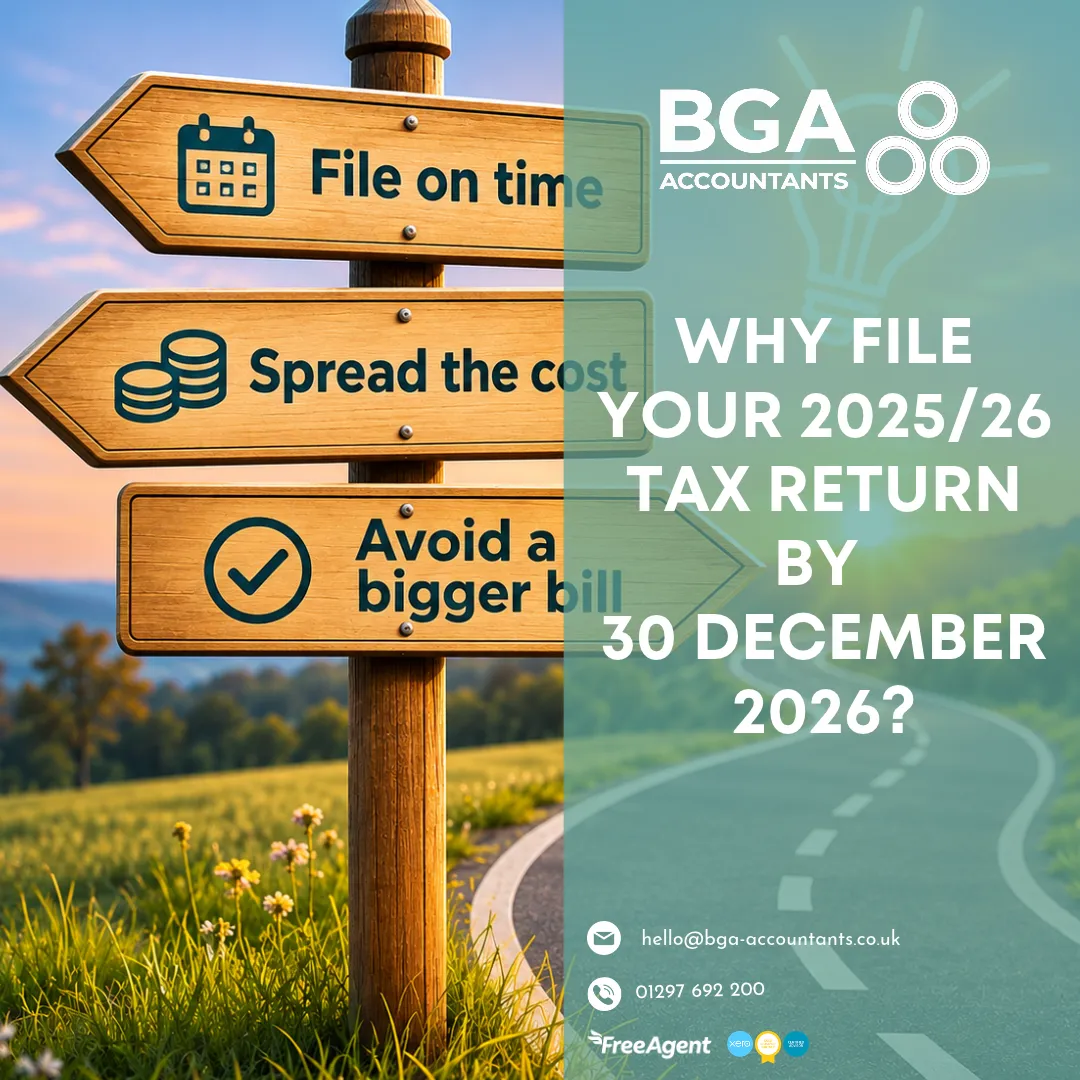
Why file your 2025/26 tax return by 30 December 2026?
Taxpayers who need to file a Self-Assessment tax return for 2025/26 must do so online before midnight on 31 January 2027. If they receive their notice to file after 31 October 2026, a later deadline of three months from the date of the notice applies. However, any tax due must still be paid by 31 January 2027.
However, where an individual owes tax and they want to pay what they owe through an adjustment to their tax code, they must file their return by 11.59pm on 30 December 2026. Where a paper return is filed, this must be filed by 31 October 2026.
A taxpayer can pay their Self-Assessment tax bill through their tax code if all of the following apply:
the amount owed is less than £3,000;
they already pay tax through PAYE, for example, because they are an employee or because they receive a company pension; and
they filed their 2025/26 tax return online by 30 December 2026 or filed a paper return by 31 October 2026.
It should be noted that this route is only available where the total amount owed under Self-Assessment is less than £3,000 – if the amount due is more than £3,000, it is not possible to make a payment to reduce the outstanding balance to below £3,000 and then pay this through the tax code.
However, even if the above conditions are met, a person will not be able to pay their tax bill through their PAYE code:
if they do not have sufficient PAYE income for HMRC to collect the tax that is owed;
if the tax is collected through PAYE, the amount paid in tax would exceed 50% of their income; or
if collecting tax through PAYE would mean that the person would pay twice as much tax as usual.
Where the return is filed by 30 December 2026 and the conditions are met, HMRC will automatically adjust the taxpayer’s code to collect the tax that they owe. If the taxpayer does not want to pay in this way, they will need to tell HMRC in their return.
Advantages and disadvantages
Paying tax through the tax code can be worthwhile. The tax that is owed for 2025/26 is collected via an adjustment to the 2027/28 tax code. This means that if a person is paid monthly, they will pay the tax in 12 instalments over the 2027/28 tax year. For example, if a person owed tax under Self-Assessment of £1,200, they would pay their tax in 12 monthly instalments of £100. However, unlike an instalment plan, there is no interest to pay.
On the downside, monthly take-home pay will fall, and this will not suit everyone. Some people may prefer to settle the bill by 31 January 2027 and maintain their monthly income.
Partner note: www.gov.uk/pay-self-assessment-tax-bill/through-your-tax-code.

The BGA Difference
Simple, Honest Advice — With No Surprises
We work on fixed monthly fees, with unlimited calls and meetings included — so you can ask questions anytime, without worrying about the cost.
Your first meeting and initial advice are always free.
We speak plain English, not accountancy jargon. You shouldn’t need a finance degree to understand your own numbers — and we’ll explain everything clearly so you feel confident, not confused.
We’ve seen it time and again: when clients understand their accounts and taxes, they make better decisions. That’s why we focus on accessible advice, regular check-ins, and smart tax planning throughout the year.
We're not the cheapest Accountant around and we don't want to be! We provide a reliable, quality service at a fair price.
Contact
Opening hours
Monday - Thursday : 9:00AM - 5PM
Helping you achieve financial success with expert guidance and personalised strategies.


© BGA Accountants. 2026. All Rights Reserved.
PRIVACY POLICY | SUPPORT | TERMS & CONDITION