Call us today on 01297 692 200 to find out how BGA Accountants can help you!

Blog
Latest Blog & Articles
Stay informed with expert financial insights! Explore our latest blogs on wealth management, retirement planning, and smart investment strategies. Empower your financial future with practical tips and expert advice.
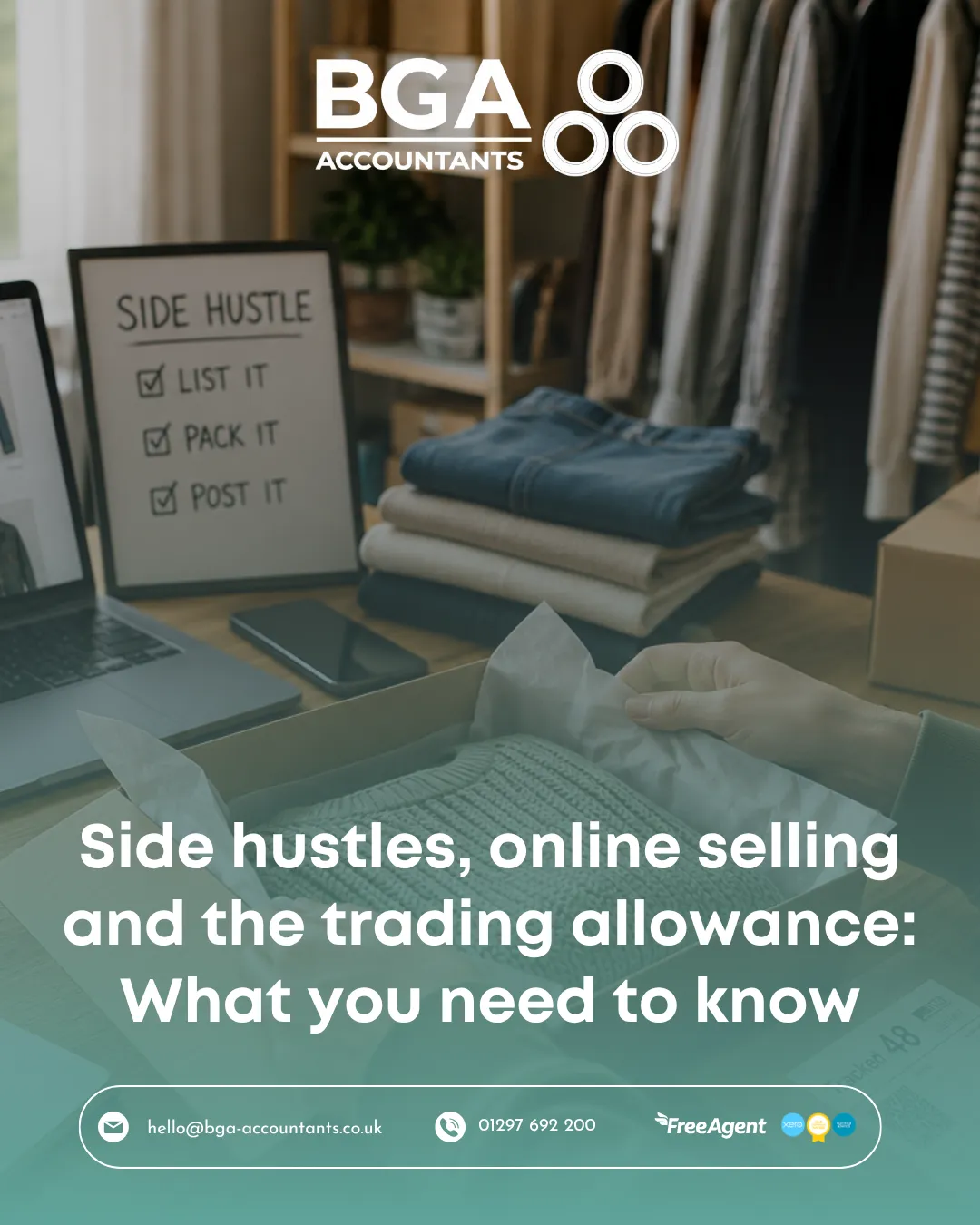
Side hustles, online selling and the trading allowance: What you need to know?
Whether you sell unwanted items on eBay or Vinted, rent out a property on Airbnb, freelance through online platforms, drive for a delivery app, earn money as a content creator, gardener, babysitter or even hire out personal equipment, it is important to understand when this extra income needs to be reported to HMRC.
The government has announced plans to increase the self-assessment reporting threshold for trading income from £1,000 to £3,000 within the current parliament, by 2029. This proposal is intended to reduce administration for people with small side businesses or occasional trading income. Importantly, the announcement does not increase the £1,000 trading allowance, therefore tax may still be payable on profits even where a self-assessment tax return is not required. HMRC intends to introduce a simplified online service for those who have tax to pay but are not required to complete a tax return.
What is the trading allowance?
£1,000 a year.
Calculation
Under trading allowance rules, taxable profits can be calculated by either:
calculating profits in the normal way using business income less allowable expenses and capital allowances, if applicable (the 'profit method'); or
claiming the £1,000 trading allowance instead of actual expenses ('partial relief').
Whichever method is used, taxable profits are subject to income tax and NIC where the relevant thresholds are met.
Other reasons for registration
Registration may also be worthwhile to protect a NIC record through voluntary Class 2 contributions (where eligible), demonstrate self-employed earnings for claims such as Maternity Allowance or where self-assessment is required for tax-free childcare claims.
The allowance has its limits
The trading allowance can only reduce taxable income to nil; it cannot create a trading loss.
Claiming the allowance may be beneficial if allowable expenses are less than £1,000. If expenses exceed £1,000, claiming actual costs will usually reduce the tax bill. However, if income is below £1,000, filing a tax return may still be worthwhile so that a trading loss can potentially be carried forward or, where permitted, relieved against other income.
The trading allowance cannot be claimed separately for a small side business if the individual already has other self-employment as the £1,000 limit applies to all trading income combined.
The allowance is also not claimable where trading income is received from:
a company that you or someone connected to you owns or controls;
a partnership in which you or a connected person has an interest; or
your employer or your spouse's or civil partner's employer.
Online platforms reporting to HMRC
Many people assume income earned through digital platforms goes unnoticed. However, under international reporting rules, online platforms such as eBay, Vinted, Airbnb, etc must collect and report information about certain sellers to HMRC. Similar reporting also applies to freelancers using online platforms, drivers and delivery workers, and content creators who receive payments through digital services.
For example, eBay reports to HMRC annually where a seller completes 30 or more transactions in a calendar year, or where total sales (after fees, commissions and cancellations are stripped out) reach€2,000 (currently about £1,710).not Therefore, a seller could be reported without owing any tax or could owe tax without triggering a platform report.
Practical point
The tax treatment depends on the nature of the activity, the individual’s total income and whether a profit is being made rather than simply selling unwanted personal possessions. As HMRC receives increasing amounts of information directly from online platforms, keeping good records will make it easier to determine whether income must be reported and ensure any deductions or reliefs available are claimed.

The BGA Difference
Simple, Honest Advice — With No Surprises
We work on fixed monthly fees, with unlimited calls and meetings included — so you can ask questions anytime, without worrying about the cost.
Your first meeting and initial advice are always free.
We speak plain English, not accountancy jargon. You shouldn’t need a finance degree to understand your own numbers — and we’ll explain everything clearly so you feel confident, not confused.
We’ve seen it time and again: when clients understand their accounts and taxes, they make better decisions. That’s why we focus on accessible advice, regular check-ins, and smart tax planning throughout the year.
We're not the cheapest Accountant around and we don't want to be! We provide a reliable, quality service at a fair price.
Contact
Opening hours
Monday - Thursday : 9:00AM - 5PM
Helping you achieve financial success with expert guidance and personalised strategies.

© BGA Accountants. 2026. All Rights Reserved.
PRIVACY POLICY | SUPPORT | TERMS & CONDITION