Call us today on 01297 692 200 to find out how BGA Accountants can help you!

Blog
Latest Blog & Articles
Stay informed with expert financial insights! Explore our latest blogs on wealth management, retirement planning, and smart investment strategies. Empower your financial future with practical tips and expert advice.
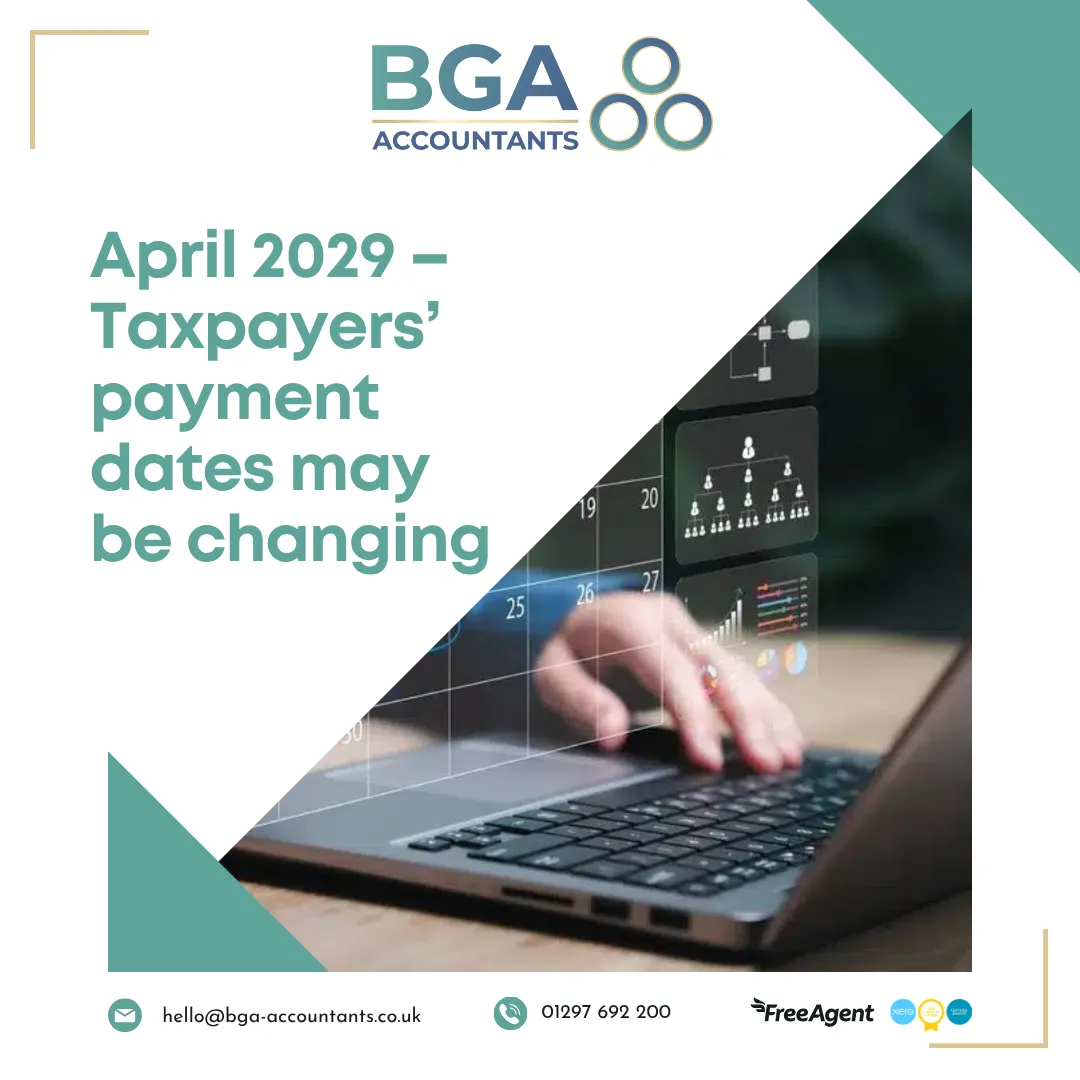
April 2029 – Taxpayers’ payment dates may be changing
By now the first quarter’s Making Tax Digital (MTD) submissions should have been made. However, by 12 August, just over 436,000 of the estimated 864,000 taxpayers affected had submitted their first quarterly update. Many taxpayers have questioned why the new system has been introduced, with some wondering whether it is simply a precursor to quarterly tax payments.
HMRC has previously stressed that MTD quarterly reporting is intended to move record-keeping closer to real time and not mean quarterly payments. However, one sentence in the 2025 Budget potentially casts doubt over whether more frequent tax payments could eventually become part of the MTD regime; the sentence being:
‘More timely payment for Self-Assessment – the government will require income tax Self-Assessment taxpayers with Pay As You Earn (PAYE) income to pay more Self-Assessment liabilities in-year via PAYE from April 2029.’
Although this was not an announcement specifically about quarterly payments, the Budget document went on to say that the government would consult on more timely payments for self-assessment taxpayers overall. The consultation paper ‘Timely Payments in Income Tax Self Assessment’ was published on 23 June and closed on 4 August with a response expected sometime in the autumn.
Consultation paper
HMRC has made no secret of its aim to align self-assessment payment dates with PAYE, believing that by doing so tax is ‘paid closer to real time, reducing the likelihood of late payments or taxpayers falling into tax debt’. The consultation paper states that approximately one in five self-assessment tax bills are paid late, estimating that a delay of up to 22 months is the norm. This not only affects taxpayers’ (and the government’s) cash flow, making it difficult to budget, but also means HMRC spends timechasing debts, issuing reminders, employing debt collectors (who obviously charge a fee for their services) and agreeing to time to pay arrangements.
The new system
The proposal is that from April 2029, employees who are also self-employed will have to make payments on account through their PAYE earnings on their forecasted self-assessment liabilities, each pay period, divided into equal payments throughout the year. The intention is that the forecasted payments will be based on the taxpayer’s last filed tax return. The consultation document gives examples of how the system will work including within the transitional period. The current amount of tax that can be collected through PAYE in any pay period is capped at 50% of PAYE income – whether that limit will be retained is being considered as part of the consultation.
The problems
1.HMRC believes that for someone with steady income, their tax payments would be largely in real time and accurately reflect their final tax bill. However, this method of calculation could mean some taxpayers making payments before they receive the associated income, which may be difficult for those with seasonal or irregular income. To alleviate this problem, HMRC intends those taxpayers to be able to update their forecast, using more recent information, so their payments are adjusted accordingly.
2.The first implementation year would be a transition year in which taxpayers would be required to make their balancing payment for the prior tax year (2028/2029) alongside their forecasted liabilities for 2029/2030. HMRC is looking at various payment options for this year including spreading the liability for the previous tax year over a longer time period (as was the case under the basis period reform in 2023/24).
3.Should a taxpayer not have sufficient PAYE income to make the additional payments, HMRC is considering 12 monthly payments or four quarterly payments in April, July, October and January; the amount being based on the previous year's tax liability, with a final adjustment when the self-assessment return is submitted.
Practical point
The consultation does not specifically align MTD quarterly updates with quarterly payments as updates are intended to move record-keeping closer to real time. Rather, the government is consulting on increasing the frequency of self-assessment payments on account.

The BGA Difference
Simple, Honest Advice — With No Surprises
We work on fixed monthly fees, with unlimited calls and meetings included — so you can ask questions anytime, without worrying about the cost.
Your first meeting and initial advice are always free.
We speak plain English, not accountancy jargon. You shouldn’t need a finance degree to understand your own numbers — and we’ll explain everything clearly so you feel confident, not confused.
We’ve seen it time and again: when clients understand their accounts and taxes, they make better decisions. That’s why we focus on accessible advice, regular check-ins, and smart tax planning throughout the year.
We're not the cheapest Accountant around and we don't want to be! We provide a reliable, quality service at a fair price.
Contact
Opening hours
Monday - Thursday : 9:00AM - 5PM
Helping you achieve financial success with expert guidance and personalised strategies.


© BGA Accountants. 2026. All Rights Reserved.
PRIVACY POLICY | SUPPORT | TERMS & CONDITION