Call us today on 01297 692 200 to find out how BGA Accountants can help you!


Blog
Latest Blog & Articles
Stay informed with expert financial insights! Explore our latest blogs on wealth management, retirement planning, and smart investment strategies. Empower your financial future with practical tips and expert advice.
Escaping the HICBC
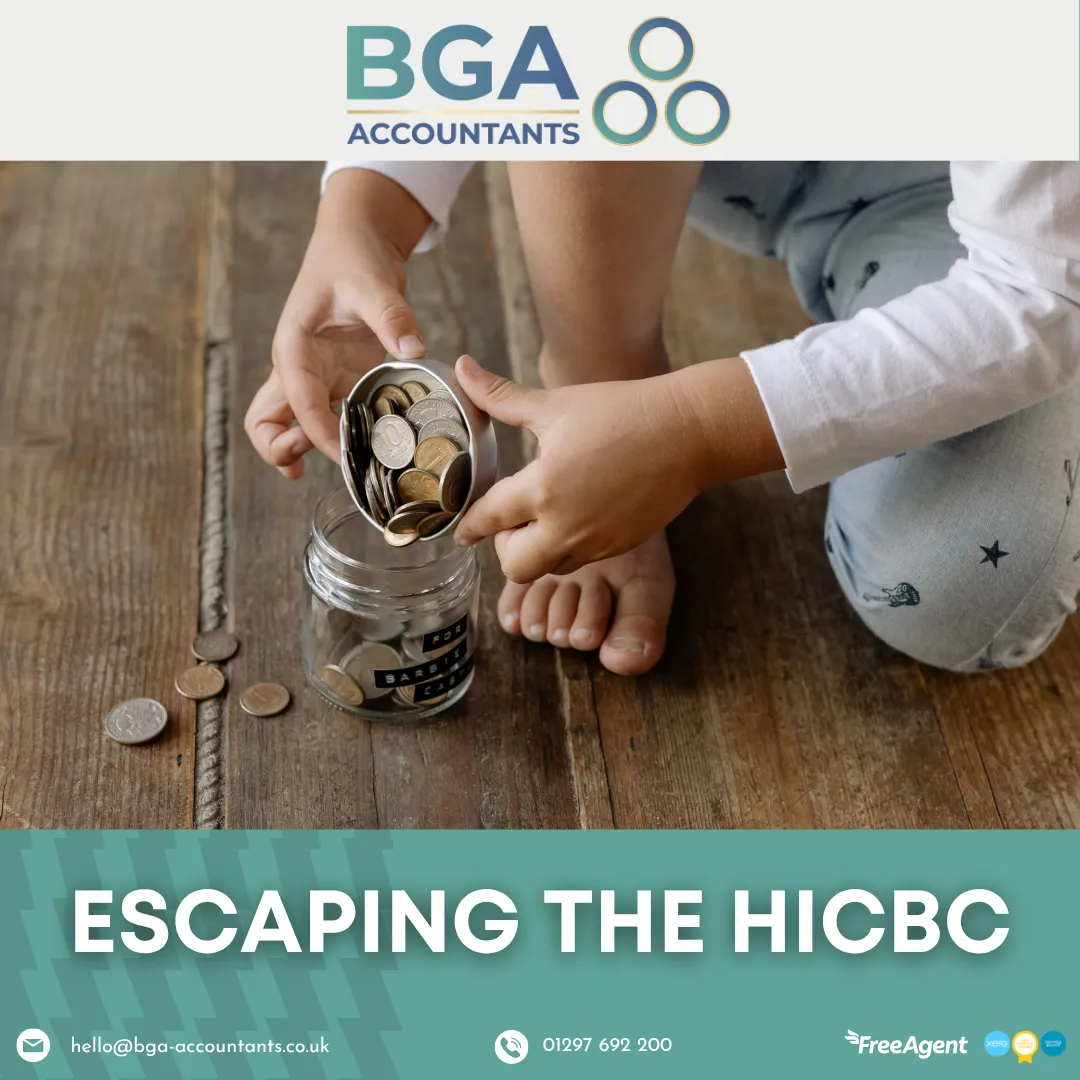
The High Income Child Benefit Charge (HICBC) is a tax which claws back child benefit where the recipient or their partner has adjusted net income of £60,000 or more in the tax year. The charge is equal to 1% of the child benefit for the year for every £200 by which adjusted net income exceeds £60,000. Once adjusted net income reaches £80,000, the charge is equal to the child benefit for the year. Where this is the case, rather than receiving the child benefit only to pay it back later, the recipient may elect to not receive the child benefit. However, it is important to register for child benefit to secure the National Insurance credit it provides, particularly if the individual will not otherwise secure a qualifying year for state pension purposes.
Where both partners have adjusted net income in excess of £60,000, the charge is levied on the one with the highest income. It does not matter who receives the child benefit – a person may be liable for the charge when the benefit is paid to their partner.
For 2026/27, child benefit is set at £27.05 per week for the first child and at £17.90 per week for each additional child.
Example
Jade and Liam have two children. For 2026/27, they receive child benefit of £44.95 per week (£2,337.40 a year). Jade is a stay-at-home parent. Liam has adjusted net income of £70,000 for 2026/27. Jade claims child benefit.
As Liam’s income exceeds the £60,000 threshold, he is liable for the HICBC. His income exceeds the threshold by £10,000. The charge is 50% of the child benefit paid to Jade (1% x (£10,000/£200)), i.e. £1,168.70.
Adjusted net income
The measure of income used to determine whether the HICBC applies is adjusted net income. This is taxable income before personal allowances, less trading losses, pension contributions and Gift Aid donations.
The charge only applies if the recipient or their partner has adjusted net income of £60,000 or more.
Keeping the child benefit
There are various steps that can be taken to eliminate or reduce the charge.
Option 1: equalise income
The charge is triggered by an individual’s income, rather than household income. A household where both parents have adjusted net income of £60,000 – household income of £120,000 – will be able to keep their child benefit in full. By contrast, a household where one parent earns £80,000 and the other does not work will pay back all their child benefit in the form of the HICBC. Consideration could be given to reducing hours or to both parents working part-time in order to prevent the HICBC applying.
Option 2: make pension contributions
Pension contributions are deducted in working out adjusted net income. Therefore, an individual can consider making pension contributions in order to reduce or eliminate the HICBC. The individual will benefit later from the pension contributions.
Example
Lucy and Olly have four children. They receive £4,199 in child benefit in 2026/27. Lucy has adjusted net income of £50,000 and Olly has adjusted net income of £75,000. The HICBC would claw back £3,149.25 of their child benefit. Olly decides to make a pension contribution of £15,000. This reduces his income to £60,000 and removes him from the scope of the HICBC.
Option 3: make Gift Aid contributions
Charitable donations made under Gift Aid are deducted in calculating adjusted net income. Consequently, it is possible to reduce or eliminate the HICBC by making Gift Aid donations to reduce adjusted net income.

The BGA Difference
Simple, Honest Advice — With No Surprises
We work on fixed monthly fees, with unlimited calls and meetings included — so you can ask questions anytime, without worrying about the cost.
Your first meeting and initial advice are always free.
We speak plain English, not accountancy jargon. You shouldn’t need a finance degree to understand your own numbers — and we’ll explain everything clearly so you feel confident, not confused.
We’ve seen it time and again: when clients understand their accounts and taxes, they make better decisions. That’s why we focus on accessible advice, regular check-ins, and smart tax planning throughout the year.
We're not the cheapest Accountant around and we don't want to be! We provide a reliable, quality service at a fair price.
Contact
Opening hours
Monday - Thursday : 9:00AM - 5PM
Helping you achieve financial success with expert guidance and personalised strategies.

© BGA Accountants. 2026. All Rights Reserved.
PRIVACY POLICY | SUPPORT | TERMS & CONDITION